
What Size Wire for Central Air Conditioner? A Professional Electrical Guide for HVAC Systems
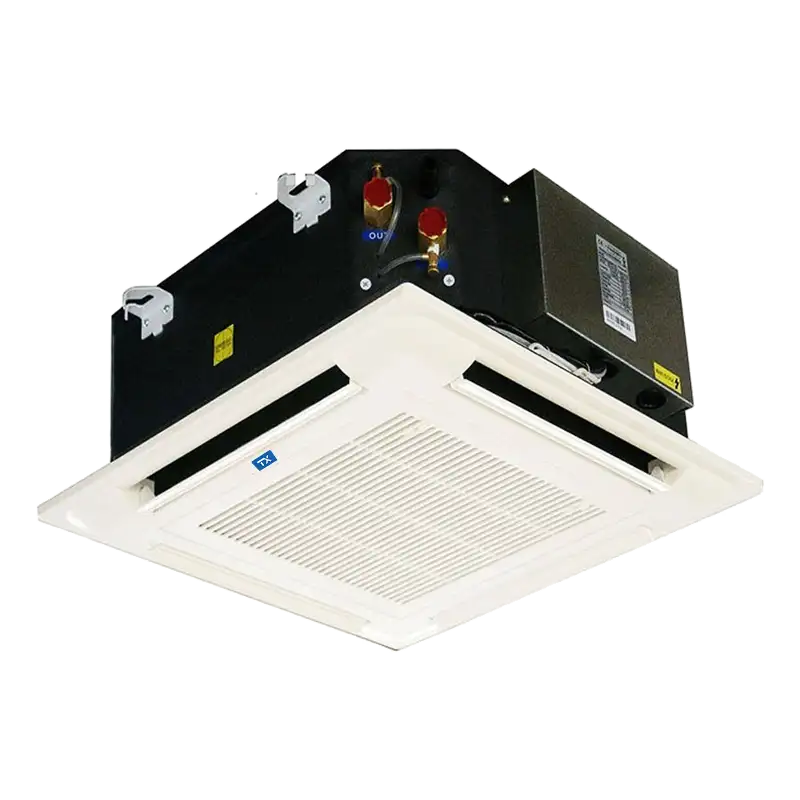
Selecting the correct electrical components for a cooling system is not merely a matter of operational efficiency—it is a critical safety requirement. Whether you are a facility manager overseeing a commercial retrofit or a homeowner upgrading your cooling capacity, the question of what size wire for central air conditioner units is one that requires technical precision and adherence to international electrical codes.
As a global leader in HVAC solutions, TongXing recognizes that the performance of a high-efficiency air conditioner is only as reliable as the infrastructure supporting it. In this comprehensive guide, we will analyze the technical requirements for AC wiring, the variables that influence gauge selection, and how to ensure your installation meets the highest safety standards.
1. The Critical Connection: Why Wire Size Matters
In electrical engineering, wire "size" refers to the thickness of the conductor, measured by the American Wire Gauge (AWG) system. A lower AWG number indicates a thicker wire capable of carrying more current (amperage).
When an HVAC compressor kicks on, it requires a significant "inrush" of current. If the wire is too thin, the electrical resistance increases, leading to:
Voltage Drop: This causes the motor to run hotter and less efficiently, significantly shortening its lifespan.
Heat Accumulation: Excessive resistance generates heat, which can melt insulation and lead to electrical fires.
System Failure: Modern smart HVAC controllers may shut down the unit if they detect inconsistent power delivery.
2. Determining the Load: What Size Wire for Central AC?
To answer what size wire for central AC, you must first look at the unit’s data plate, typically located on the outdoor condenser. You will encounter two critical acronyms defined by the National Electrical Code (NEC):
MCA (Minimum Circuit Ampacity): This is the value used to size the wire. It represents the maximum current the unit will draw under steady-state conditions.
MOP (Maximum Overcurrent Protection): This value determines the maximum size of the circuit breaker.
The General Rules of Thumb (Copper Wire)
While every installation is unique, the following table provides a standard baseline for residential and light commercial central AC units using copper conductors:
AC Tonnage | Typical MCA (Amps) | Recommended Wire Size (AWG) | Breaker Size (Amps) |
1.5 - 2.0 Tons | 15 - 20A | 12 AWG | 20A |
2.5 - 3.0 Tons | 25 - 30A | 10 AWG | 30A |
3.5 - 4.0 Tons | 35 - 45A | 8 AWG | 40A - 50A |
5.0 Tons | 50A+ | 6 AWG | 60A |
Note: For long-distance runs (over 100 feet), HVAC professionals often "upsize" the wire to the next gauge to compensate for voltage drop.
3. Component Focus: What Size Wire for AC Condenser?
The outdoor portion of your system is the most power-hungry. When contractors ask what size wire for AC condenser units, they must consider the environmental conditions.
Experience from the Field: The "High-Ambient" Scenario
In a recent project involving a commercial office complex in a region with extreme summer temperatures, our engineering team observed that standard wiring was underperforming. Because the wiring ran across a sun-exposed rooftop, the "ambient temperature derating" factor came into play. According to ASHRAE guidelines, as the environment around the wire heats up, its ability to carry current safely decreases.
In such cases, even if a 3-ton unit technically requires 10 AWG, a professional might specify 8 AWG THWN-2 wire to ensure stability during a 105°F heatwave. This level of foresight is what separates a standard installation from a TongXing grade solution.
4. Understanding Cable Types: 10/2 vs. 10/3
Once you know the gauge, you must choose the cable configuration.
10/2 Wire: Contains a black (hot) wire, a white (hot in 240V systems, usually marked with tape), and a bare copper ground. Most standard 240V central AC condensers use this.
10/3 Wire: Adds a red (hot) and a neutral wire. This is typically required only if the unit has 120V auxiliary components (like a specialized control board or an internal outlet) that require a neutral.
5. Why Precision in Wiring Protects Your Investment
As a premier supplier of what size wire for central air conditioner systems, TongXing emphasizes that electrical harmony is key to equipment longevity. Our VRF and central AC units are engineered with advanced inverter technology, which can be sensitive to power fluctuations caused by improper wiring.
When you invest in a TongXing system, you are benefiting from:
Rigorous Engineering: Our units are tested under load conditions that exceed standard requirements.
Detailed Documentation: We provide precise electrical specifications for every model, removing the guesswork for your electrical contractor.
Global Reliability: Our systems operate in diverse electrical grids, from 50Hz to 60Hz environments, requiring adaptable and robust wiring strategies.
6. Professional Installation Checklist
Before finalizing your what size wire for central air conditioner decision, ensure your contractor checks the following:
Conduit Usage: Outdoor wiring must be protected by liquid-tight flexible metal conduit (LFMC) or rigid PVC to prevent UV damage and moisture ingress.
Copper vs. Aluminum: While aluminum is cheaper, copper is the industry standard for AC units due to its superior conductivity and lower risk of thermal expansion issues at connection points.
Disconnect Box: A safety disconnect switch must be located within sight of the unit, as required by the NEC for emergency shut-off.
Voltage Drop Calculation: If the distance between the breaker panel and the condenser exceeds 100 feet, use the formula:
$$VD = \frac{2 \times L \times R \times I}{1000}$$
(Where L is length, R is resistance, and I is current).
7. Frequently Asked Questions (FAQ)
Can I use 12-gauge wire for a 3-ton AC?
Generally, no. A 3-ton AC usually has an MCA exceeding 20 Amps, which requires 10-gauge wire. Using 12-gauge could cause the wire to overheat and trip the breaker frequently.
Does a central air conditioner need a neutral wire?
Most standard 240V condensing units do not require a neutral wire—only two hots and a ground. However, always consult the specific TongXing wiring diagram for your model.
What happens if the wire size is too large?
There is no safety hazard in using a wire that is "too thick" (e.g., using 8 AWG when 10 AWG is required). The only downsides are increased cost and the difficulty of fitting thicker wire into terminal lugs.
Conclusion: Safety is Non-Negotiable
Choosing what size wire for central AC is a technical decision that impacts the safety of the building and the efficiency of the machine. By adhering to the MCA ratings on your equipment and consulting with experts, you protect your cooling investment for the long term.
At TongXing, we pride ourselves on providing not just the hardware, but the expertise needed to create a perfect indoor environment. From energy-efficient VRF systems to heavy-duty central units, we ensure our partners have the knowledge to install every component correctly.
Contact TongXing for Expert HVAC Solutions
Are you planning a large-scale project or looking for high-reliability HVAC equipment? Our global team is ready to assist you with technical specifications and premium products.
Website: www.tongxinghvac.com
WhatsApp/Tel: +86 19903816965
Email: admin@tongxingac.com
PREVIOUS:
