
The Ultimate Guide: How to Determine the Size of Central Air Conditioner Needed (2026 Edition)
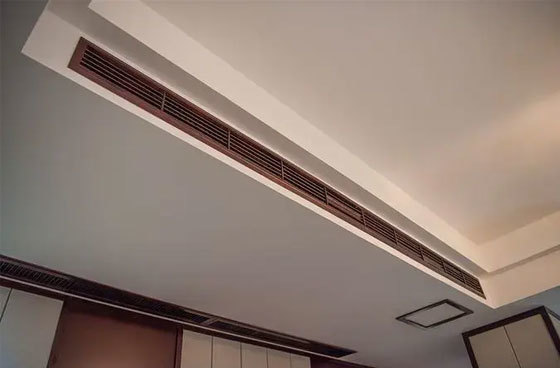
When the summer heat reaches its peak, your central air conditioning system is more than a luxury—it’s a critical component of your home’s infrastructure. However, as many homeowners and facility managers discover too late, cooling performance isn’t just about the brand you buy; it’s about the math behind it.
Choosing the wrong size—a mistake known in the industry as "mis-sizing"—can lead to skyrocketing energy bills, poor humidity control, and a system that burns out years before its time. In this comprehensive guide, we will leverage over a decade of HVAC engineering expertise to show you exactly how to determine the size of central air conditioner needed for your specific space.
1. Why "Bigger" is Rarely "Better" in HVAC
In many industries, extra capacity is a safety net. In HVAC, it is a liability. Understanding the balance of thermodynamics is the first step toward true home comfort.
The Problem with Oversizing (Short-Cycling)
If a unit is too powerful for the space, it will reach the thermostat's target temperature almost instantly and shut off. This is called short-cycling. Because an air conditioner’s secondary job is to dehumidify, a short-cycling unit never runs long enough to remove moisture from the air. You end up with a room that is cold but "clammy."
The Problem with Undersizing
Conversely, a unit that is too small will run 24/7, struggling to meet the setpoint. This leads to:
Mechanical Fatigue: Excessive wear on the compressor and fan motors.
High Utility Costs: Continuous power draw without achieving comfort.
2. The Core Metric: Understanding BTUs and Tons
Before calculating, you must speak the language of HVAC professionals. Central AC capacity is measured in BTUs (British Thermal Units) and Tons.
BTU: The amount of heat required to raise the temperature of one pound of water by one degree Fahrenheit.
Ton: In cooling, one "ton" equals the ability to remove 12,000 BTUs of heat per hour.
Pro Tip: If an HVAC contractor tells you that you need a "3-ton unit," they are saying your home requires 36,000 BTUs of cooling capacity per hour.
3. Step-by-Step: How to Determine the Size of Central Air Conditioner Needed
While a professional load calculation is always recommended, you can estimate your needs using this industry-standard progression.
Step 1: Calculate Total Square Footage
Measure the length and width of each room that will be cooled by the central system. Sum these areas up, but exclude unconditioned spaces like garages, unfinished basements, or open porches.
Step 2: The Base Calculation
The general "rule of thumb" in the HVAC industry is that you need approximately 20 BTUs per square foot of living space.
$$\text{Base BTUs} = \text{Square Footage} \times 20$$
Step 3: Account for Environmental Variables
This is where standard "charts" found on big-box retailer sites often fail. To achieve EEAT-level accuracy, you must adjust for:
Windows and Sunlight: If your home has many large, south-facing windows, increase your BTU estimate by 10%.
Occupancy: Each person living in the home adds about 400 BTUs of heat. If you regularly host four people in a living area, add 1,600 BTUs.
Kitchen Heat: If the AC covers a kitchen where ovens and stoves run frequently, add 4,000 BTUs to that zone’s requirement.
4. The Professional Standard: The Manual J Load Calculation
For those seeking the highest level of precision—especially in commercial or large-scale residential projects—industry authorities like ASHRAE (American Society of Heating, Refrigerating and Air-Conditioning Engineers) and ACCA recommend the Manual J Calculation.
Unlike simple area-based estimates, a Manual J audit considers:
Insulation R-values: The thickness of your attic and wall insulation.
Infiltration Rates: How much air "leaks" through doors and windows.
Local Climate Data: The 1% "design temperature" (the highest temperature your area typically reaches).
At TongXing, we emphasize that sizing a central air conditioner is a science. Whether you are installing a residential split system or a sophisticated VRF (Variable Refrigerant Flow) system in a commercial complex, relying on data-driven load calculations ensures long-term ROI.
5. Regional Climate Zones and Their Impact
The "20 BTUs per square foot" rule varies significantly depending on your geographic location. The U.S. Department of Energy divides regions into climate zones.
Region | Climate Type | Estimated BTUs per Sq. Ft. |
Zone 1 (South) | Hot & Humid (e.g., Florida, Gulf Coast) | 25 - 30 BTUs |
Zone 3 (Central) | Temperate (e.g., Missouri, Virginia) | 20 - 22 BTUs |
Zone 5 (North) | Cold (e.g., Minnesota, Maine) | 18 - 20 BTUs |
6. Real-World Case Study: Sizing for a Multi-Story Office
Imagine a 5,000-square-foot commercial office space in a temperate climate.
Base Estimate: $5,000 \times 20 = 100,000 \text{ BTUs}$.
Adjustment for Computers/Equipment: Each server and workstation generates heat. In a modern office, we might add 15,000 BTUs for equipment.
Total Requirement: 115,000 BTUs.
Conversion to Tons: $115,000 / 12,000 \approx 9.5 \text{ Tons}$.
In this scenario, a single 10-ton unit or two 5-ton units might be considered. However, a professional would likely recommend a TongXing VRF system, which allows for modular capacity control, ensuring that only the occupied zones are cooled, vastly reducing energy waste.
7. The Role of SEER2 in Modern Selection
In 2026, you cannot discuss sizing without mentioning SEER2 (Seasonal Energy Efficiency Ratio 2). This updated standard reflects more realistic external static pressure conditions.
While SEER2 doesn't change the size (BTUs) you need, it changes the efficiency of how those BTUs are delivered. A properly sized high-SEER2 unit will provide more consistent cooling with lower peak power demand than an older, oversized unit.
8. Why Choose TongXing for Your HVAC Needs?
Selecting the right size is only half the battle; the other half is selecting a manufacturer that stands behind its engineering. TongXing is a leading global supplier of advanced HVAC systems, specializing in high-performance central air conditioning and VRF solutions.
Our systems are engineered for durability and precision. When you work with TongXing, you aren't just buying hardware; you are accessing decades of expertise in thermal management. We provide:
Precision Engineering: Components designed to handle extreme ambient temperatures without losing capacity.
Global Support: A dedicated network to help you navigate the complexities of large-scale HVAC installations.
Customization: From residential complexes to industrial facilities, our units are built to meet the exact load requirements of your project.
Conclusion
Learning how to determine the size of central air conditioner needed protects your investment and your comfort. By calculating your square footage, adjusting for local climate zones, and considering internal heat gains, you move from guesswork to professional-grade planning.
Don't leave your comfort to a "rule of thumb." For high-efficiency equipment that meets the rigorous demands of modern building codes, trust the experts at TongXing.
Contact Us Today for a Professional Consultation
Ready to upgrade your cooling system? Our engineers are standing by to assist with your technical specifications and load requirements.
Official Website: www.tongxinghvac.com
WhatsApp/Tel: +86 19903816965
Email: admin@tongxingac.com
PREVIOUS:
