
Can a Portable Generator Run a Central AC? The Sizing & Setup Guide
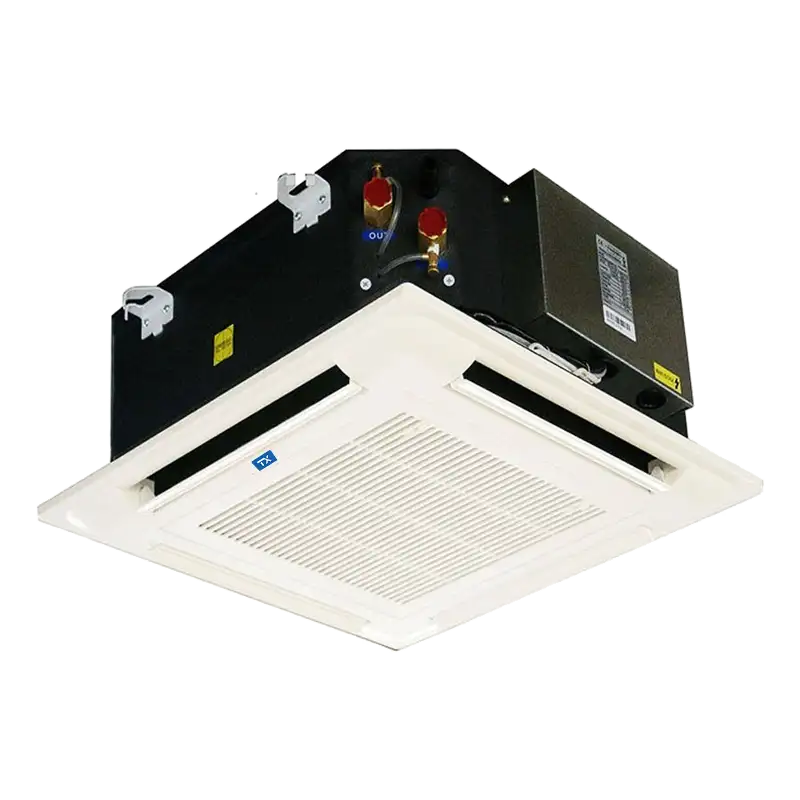
When severe summer storms, hurricanes, or unexpected grid instabilities trigger prolonged power outages, keeping your property’s indoor climate controlled shifts from a luxury to an immediate safety priority. During these critical grid blackouts, property owners frequently ask: Can a portable generator run a central AC?
The short answer is yes, but it requires precise capacity calculations and specialized equipment modification. You cannot simply plug a heavy-duty whole-house system into a standard consumer-grade tailgate generator. Central air conditioning units demand massive amounts of electricity—specifically during the initial fraction of a second when the compressor motor spikes to life.
To determine if your emergency hardware can successfully sustain a cooling cycle without tripping its internal breakers, we must examine the thermodynamic and electrical laws governing starting vs. running wattages.
The Core Engineering Problem: Starting Watts vs. Running Watts
When sizing a portable generator central air conditioner infrastructure matrix, you must balance two completely distinct electrical power demands:
Running Watts (Rated Watts): This represents the continuous electrical consumption required to keep the condenser fan spinning and the refrigerant pumping smoothly once the system reaches thermodynamic equilibrium.
Starting Watts (Surge Watts / Locked Rotor Amps): When an air conditioner compressor initiates a cycle from a dead stop, it must overcome extreme mechanical inertia and fluid head pressures. This demands a massive instantaneous burst of electrical energy—known as inrush current—that is typically two to three times higher than the unit's normal continuous running consumption.
If your portable generator possesses enough capacity to handle the running watts but lacks the headroom to absorb the initial starting surge, its automated safety sensors will interpret the spike as a dangerous short circuit, immediately tripping the generator's breaker and shutting down the power line.
Sizing Matrix: What Size Generator Do You Need Based on AC Tonnage?
Air conditioning capacity is measured by HVAC engineers in tons (where 1 Ton = 12,000 BTU/hr of heat rejection capacity). Use this baseline operational correlation table to cross-reference your system's structural cooling tonnage against minimum generator dimensions:
Central AC Tonnage to Generator Wattage Correlation Matrix
System Cooling Tonnage | Equivalent Cooling Capacity | Average Continuous Running Watts | Estimated Starting Surge Watts (No Soft Start) | Minimum Recommended Portable Generator Size |
1.5 Tons | 18,000 BTU/h | 1,500 – 2,000 W | 3,500 – 4,500 W | 5,500 Watts |
2.0 Tons | 24,000 BTU/h | 2,000 – 2,500 W | 5,000 – 6,000 W | 7,500 Watts |
3.0 Tons | 36,000 BTU/h | 3,000 – 3,500 W | 8,500 – 10,500 W | 11,500+ Watts (Heavy-Duty) |
4.0 to 5.0 Tons | 48,000 – 60,000 BTU/h | 4,500 – 6,000 W | 12,000 – 16,000+ W | Exceeds Safe Portable Limits (Requires Fixed Standby Plant) |
Important Safety Buffer Check: These figures reflect the needs of the air conditioner alone. If you plan to simultaneously power critical facility infrastructure—such as commercial refrigeration, server arrays, emergency lighting, or deep-well water pumps—you must add those active loads directly to your total generator capacity metrics.
The Game Changer: Using a Soft Starter to Lower Surge Amps
If the table above shows that your 3-ton central system requires a massive 11,500-watt generator that stretches your portable equipment budget, you don't necessarily have to purchase a massive commercial generator. Instead, you can bypass this limitation by implementing a field modification known as an HVAC Soft Starter.
[Image contrasting the electrical surge profiles of standard central AC startup curves against a flattened soft-starter ramp curve]
A soft starter is an intelligent micro-control module installed directly inside your air conditioner's outdoor service access panel. Instead of allowing a raw, unchecked wave of electrical current to slam into the compressor windings all at once, the soft starter uses internal solid-state switches to step up the voltage gradually over several hundred milliseconds.
Implementing a soft starter slashes your central AC's starting surge wattage requirement by 60% to 70%. This simple electrical reduction can drop a 3-ton unit’s starting requirement from a dangerous 10,500W surge down to a highly manageable 4,000W wave, allowing an affordable, mid-sized portable generator to handle the system effortlessly.
The Future of Backup Power: Inverter VRF Systems with Zero Electrical Surge
If you are planning an infrastructure upgrade and are worried about the electrical stress a conventional portable generator central air conditioner pairing places on your emergency panels, the long-term solution lies in moving toward multi-zone variable capacity networks.
Modern Variable Refrigerant Flow (VRF) and Variable Refrigerant Volume (VRV) systems completely redefine emergency power optimization. Because these systems utilize advanced, DC-inverter-driven variable-speed compressors, they do not suffer from the aggressive on-off cycles that define single-stage legacy hardware.
When a VRF central system initiates a cooling cycle, the compressor rotates at an ultra-low frequency, drawing a soft, minimal current that is frequently lower than its maximum continuous running speed. This complete elimination of electrical inrush spikes makes VRF systems ideal for properties relying on alternative generator backup frameworks, solar microgrids, or commercial emergency battery banks.
Safety Protocol: Manual Transfer Switches and Interlock Kits
Under National Electrical Code (NEC) Section 702, you must never connect a portable generator directly into a building's standard wall outlet using a dangerous double-ended male plug (commonly known as "backfeeding"). Backfeeding sends high-voltage electricity backwards through your electrical meter and out onto local utility lines, creating a lethal electrocution hazard for utility line technicians working to restore grid power.
To connect a portable generator to your central cooling loop safely, you must utilize one of two code-compliant methods:
A Manual Transfer Switch: A dedicated electrical subpanel that isolates critical HVAC circuits away from the primary utility grid, linking them directly to your external generator input.
A Breaker Interlock Kit: A mechanical sliding plate installed on your main service panel that physically prevents the main utility breaker and the generator backfeed breaker from being turned on at the exact same time.
FAQ: Critical Generator and Central AC Questions Answered
Can a solar-powered portable generator run a whole-house central AC?
Only under highly specific, industrial-grade design configurations. The vast majority of standard plug-and-play solar generator power stations max out at continuous outputs of 2,000W to 3,600W, which is insufficient to absorb the inrush currents of a multi-ton ducted system. For solar operation, you require a hardwired commercial inverter bank paired with low-surge inverter VRF central equipment.
What happens if my generator is slightly too small for my central air conditioner?
If the generator lacks the surge capacity to handle the compressor's startup requirement, the generator’s magnetic safety breaker will trip instantly, shutting down power to the unit. If the safety breaker fails to trip, the prolonged low-voltage strain (brownout state) can quickly overheat the compressor’s motor windings, causing permanent insulation damage and compressor failure.
Need Specialized Mechanical System Design or Factory-Direct Equipment Procurement?
Balancing emergency infrastructure reliability with premium, day-to-day climate control requires expert mechanical layout synchronization. If your corporate development, high-end residential complex, or light industrial facility demands robust climate continuity during environmental power grid interruptions, moving to advanced variable capacity systems eliminates traditional electrical surge limitations.
The commercial engineering matrix at Tongxing HVAC designs, manufactures, and globally supplies premium, CTI-certified VRF/VRV central inverter air systems. Our high-efficiency layouts feature built-in soft-start variable performance profiles that are fully compatible with modern building backup power networks. Contact our global project desk today for specialized plan-view consulting and competitive factory-direct wholesale equipment quotations.
Official Website: www.tongxinghvac.com
WhatsApp/Tel: +86 19903816965
Email: admin@tongxingac.com
