
Central Air Conditioner vs Wall Unit: The Ultimate 2026 HVAC Guide
When designing, renovating, or retrofitting a high-end residential estate or a commercial facility, selecting the correct HVAC infrastructure is one of the most critical structural decisions you will make. The debate between a centralized system and localized thermal control often comes down to evaluating a central air conditioner vs wall unit.
The fundamental difference between both systems lies in how the air is recirculated and thermally managed. A traditional central air unit distributes conditioned air uniformly through a complex network of hidden sheet-metal ducts throughout the entire property. In contrast, a wall-mounted unit handles local air recirculation directly within the specific zone it occupies, operating without any spatial duct requirements.
To determine which setup offers the highest performance profile for your specific blueprints, we must look past basic consumer descriptions and analyze the deep thermodynamic, acoustic, and financial realities of both engineering platforms.
What Is the Difference Between a Wall Unit and a Central AC Unit?
To establish a proper baseline, we must categorize the mechanical frameworks of these technologies under updated 2026 efficiency and installation parameters.
1. Central Air Conditioning Systems (Duct-Dependent)
A central air conditioning system acts as a macro-climate solution. It utilizes a single high-tonnage outdoor condenser paired with a centralized indoor air handler (AHU) or furnace.
The system cools or heats air in a central location and then relies on a powerful blower fan to push massive cubic feet per minute (CFM) volumes through supply ducted lines built into the floors, walls, or ceilings, drawing stagnant air back through dedicated return grilles.
2. Wall-Mounted Units (Ductless Mini-Split & Terminal Systems)
A wall-mounted terminal unit operates as a micro-zone solution. Each unit features its own localized tangential fan assembly, air filtration mesh, and direct expansion (DX) evaporator coil encased in a sleek, compact modern chassis mounted directly onto an interior wall surface.
Rather than channeling air through long building voids, it draws ambient air from the immediate room, passes it across the cold coil rows, and discharges it back into the space. The indoor unit links to an outdoor compressor solely via slim, low-profile copper refrigerant lines and low-voltage control wiring.
The Technical Comparison Matrix: Efficiency, Noise, and Aesthetics
Choosing the optimal mechanical layout requires balancing structural architectural limitations with day-to-day operational realities.
Evaluation Metric | Traditional Central AC Unit | Wall-Mounted Terminal Unit |
Ductwork Requirements | Heavy architectural invasion; demands drop-ceilings and bulkheads. | None; requires only a minimal 3-inch penetration hole through external walls. |
Zoning Precision | Weak; typically relies on single-thermostat averages across large zones. | Absolute; every individual room features dedicated thermistors and fine tuning. |
Acoustic Rating (Indoor) | 35 – 45 dB (Prominent air rushing and duct rattle velocity noise). | 19 – 28 dB (Ultra-silent localized operation; whisper-quiet profiles). |
Indoor Structural Aesthetics | Near-Invisible; leaves clean ceilings utilizing flush linear slot diffusers. | Visible; requires dedicated wall space for the modern terminal chassis. |
Energy Loss Profile | High thermal duct leakage (Up to 20–30% capacity dissipation). | Zero duct-loss; direct expansion localized heat transfer ensures high efficiency. |
Architectural Selection: Which Is Better for Your Property Layout?
When assessing central air conditioner vs wall unit for large-scale luxury properties or multi-story commercial buildings, a simple binary choice no longer applies. Modern mechanical engineering favors merging these concepts via advanced VRF/VRV split platforms.
Instead of boxing your building design into rigid traditional constraints, modern Variable Refrigerant Flow (VRF) technology allows a single smart, inverter-driven outdoor system to simultaneously manage diverse indoor terminal selections.
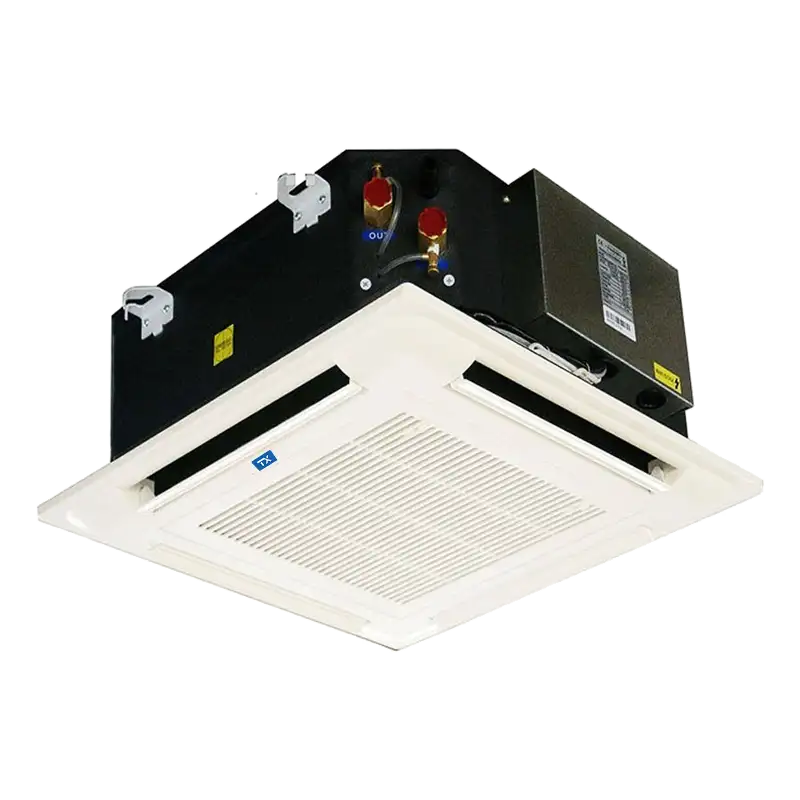
This means you can specify high-static concealed central ducted units for expansive, open-concept lobbies where zero visual impact is required, while seamlessly branching off to direct-expansion wall units or ceiling cassettes in private perimeter offices, bedrooms, or server rooms to achieve zone-specific energy isolation.
The Financial Blueprint: Upfront Procurement Costs vs. Lifetime ROI
For property developers and corporate CFOs, mechanical system purchasing must be backed by a clear long-term lifecycle calculation. The total economic impact is governed by the standard Total Cost of Ownership (TCO) model:
$$\text{Net Lifetime ROI} = \sum_{t=1}^{n} \frac{\text{Ductless Efficiency Savings}_t - \text{Maintenance Margins}_t}{(1 + r)^t} - \Delta \text{Initial Sourcing Cost}$$
According to extensive field metrics compiled by the U.S. Department of Energy (DOE), traditional ducted air distribution systems suffer an average thermal energy dissipation rate of 20% to 30% strictly through localized duct leaks, seams, and poor insulation pathways running through unconditioned attics or drop-ceiling voids.
While a variable-capacity multi-zone high-wall system carries a higher equipment procurement cost upfront due to its integrated electronic expansion valves (EEVs) and digital inverter control boards, it completely eliminates ductwork losses.
By delivering targeted direct expansion cooling only to occupied zones, these high-efficiency layouts slash monthly facility electrical consumption by up to 40%, delivering a full capital expenditure payback within 3 to 5 operational seasons.
FAQ: Common Central AC and Wall Unit Queries Answered
Does a central air conditioner use more electricity than individual wall units?
Yes, in the vast majority of operational profiles. Traditional central AC systems operate using fixed-speed, single-stage compressors that run at 100% capacity regardless of whether you are cooling one room or ten. Wall units or VRF multi-splits allow you to completely power down conditioning in unoccupied areas, significantly minimizing your building's operational carbon footprint.
How do I maintain optimal indoor air quality (IAQ) with wall-mounted units vs central AC?
Traditional central AC systems utilize thick media filters inside a central air handler to scrub air across the entire building, but dirty duct networks can harbor dust and mold over time. Wall-mounted units eliminate duct tracking entirely; they utilize localized, easily accessible washable multi-stage mesh filters. For high-occupancy commercial projects, modern wall units can be paired with small, dedicated outdoor air systems (DOAS) to introduce fresh, filtered ventilation air into the building loop.
Need Advanced Mechanical Design Support or Factory-Direct Sourcing?
Navigating the complexities of multi-zone climate engineering demands more than matching generic square-footage charts. To maximize your infrastructure's operating efficiency, your layout must be tailored to strict sensible heat ratios, building static characteristics, and long-term thermal loads.
The commercial engineering division at Tongxing HVAC designs, manufactures, and globally distributes premium, CTI-certified VRF/VRV variable refrigerant multi-split central air systems. Whether you require whisper-quiet wall-mounted terminal profiles for a luxury hotel development or concealed ducted layouts for an industrial complex, our engineering team provides full plan-view configurations and direct, competitive factory-wholesale quotations.
Official Website: www.tongxinghvac.com
WhatsApp/Tel: +86 19903816965
Email: admin@tongxingac.com
PREVIOUS:
