
Central Air Conditioner Running But Not Cooling or Blowing Air? The Expert Diagnostic Guide
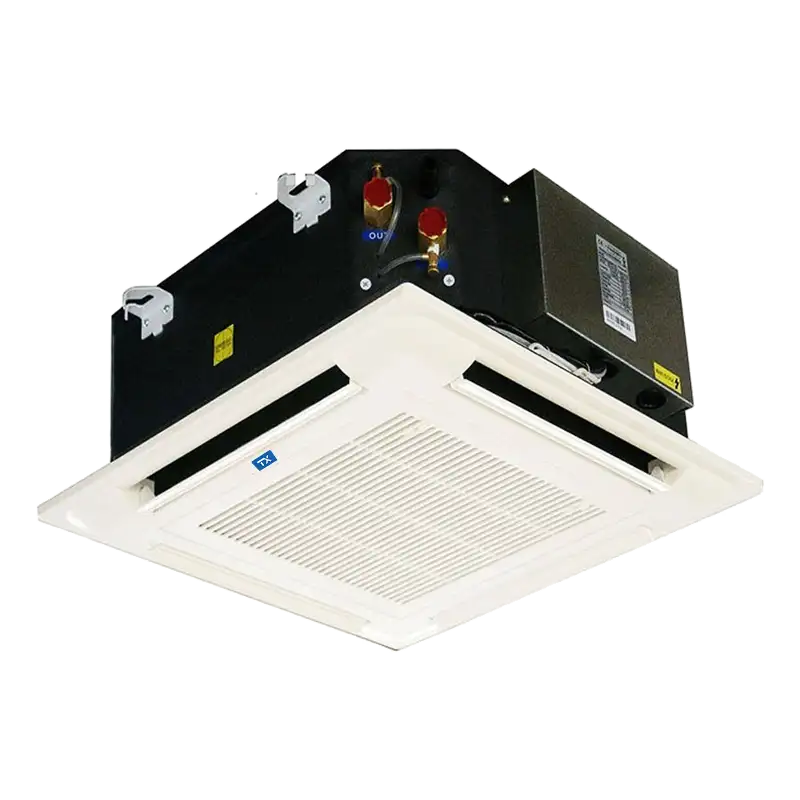
When summer temperatures spike, a breakdown in your centralized climate control network is an immediate infrastructure emergency. However, diagnosing an unresponsive system requires precise observation. Facility managers and property owners typically encounter two distinct, often confused, mechanical failure modes: the fan is blowing but the air stays warm, or the system is running but there is absolutely zero airflow coming from the vents.
Before you authorize an expensive emergency mechanical call-out, it is essential to isolate whether your system is suffering from a thermodynamic refrigerant failure or a physical airflow blockage. This technical guide breaks down both failure paths step-by-step, providing clear diagnostic frameworks to restore your building's thermal equilibrium.
Scenario A: Central Air Conditioner Fan Blowing But Not Cooling
If you can feel a strong, consistent stream of air rushing out of your supply registers, but the air temperature matches or exceeds the room's ambient temperature, your indoor air handler is working perfectly. The breakdown lies entirely within your outdoor heat-rejection loop.
When your indoor fan is blowing but the system fails to cool, the primary failure points usually include:
A Blown Outdoor Run Capacitor: This small, cylindrical component delivers the electrical torque required to start and run the outdoor compressor. Due to summer heat stress or electrical line surges, capacitors frequently fail or swell. When this happens, the outdoor fan might spin, but the compressor remains dead, leaving the system unable to pump refrigerant.
Tripped Outdoor Circuit Breaker: Central air conditioning networks split their power draw. Your indoor blower fan runs on a separate breaker or low-voltage transformer line than the high-amperage outdoor unit. If a voltage spike trips the outdoor breaker, the indoor fan will continue to recirculate warm ambient air indefinitely.
Severe Refrigerant Loss: Refrigerant acts as the thermodynamic vehicle that carries heat out of your property. If a micro-fracture or formicary corrosion develops in your copper coils, the chemical charge escapes. Without adequate operating pressure, the system can move massive volumes of air, but it cannot lower the air temperature.
Scenario B: Air Conditioner Not Blowing Air But Running
A completely different failure framework occurs when you can hear the outdoor unit humming or the indoor cabinet vibrating, yet the air registers throughout your building remain dead and airless. When your air conditioner is not blowing air but running, the thermal energy has nowhere to go, creating an immediate risk of system self-destruction.
1. The Frozen Evaporator Coil Barrier
This is the single most common culprit behind a system that runs without blowing air. When a system suffers from a neglected, dust-clogged air filter or a low refrigerant charge, the temperature of the indoor evaporator coil drops well below $32^{\circ}\text{F}$ ($0^{\circ}\text{C}$).
Atmospheric moisture passing over the coil instantly freezes, compounding layer after layer until the entire metal assembly is encased in a solid block of structural ice. This ice barrier completely seals off the air channels. Your blower motor may be running, but it cannot force air through a solid wall of ice.
2. Burned Blower Motor or Snapped Drive Components
If your thermostat status screen indicates the system is actively cooling, and you hear the outdoor compressor engagement rumble, but the indoor fan remains entirely silent, your indoor blower motor has likely suffered an internal electrical winding burnout, a failed indoor run capacitor, or a snapped fan belt in older belt-driven handling configurations.
Advanced Diagnostics for Multi-Zone VRF/VRV Central Systems
While simpler residential split systems where a faulty thermostat causes standard airflow issues, diagnosing why an advanced inverter-driven central air conditioner fan blowing but not cooling requires analyzing electronic expansion valve codes and centralized communication bus health.
In sophisticated Variable Refrigerant Flow (VRF) or Variable Refrigerant Volume (VRV) systems, an internal communication glitch between the central outdoor mainboard and an individual zone's Electronic Expansion Valve (EEV) can halt cooling to a specific branch. The indoor fan will continue to run in ventilation mode, but the system will withhold refrigerant flow to that specific zone, causing a localized "warm air" symptom that requires digital fault-code scanning to resolve.
Diagnostic Matrix: Symptoms, Root Causes, and Cost Estimates
To help your property maintenance team or facility supervisors evaluate potential maintenance liabilities, use this quick-reference operational chart:
Observed System Symptom | Primary Mechanical Root Cause | Required Corrective Action | Estimated Field Cost (USD) |
High airflow, but vent temperature is warm | Failed outdoor run capacitor / Pitched contactor | Verify capacitance; replace electrical contactor assembly | $120 – $260 |
Indoor fan runs, outdoor unit completely dead | Tripped high-amperage outdoor breaker | Reset breaker once; perform winding test if it trips again | $0 (DIY) / $150 |
System hums loudly; zero airflow from vents | Frozen evaporator coil block | Shut system completely OFF; allow 4–6 hours to melt | $15 – $50 (Filter cost) |
Total silence indoors; outdoor compressor cycles | Burned indoor fan blower motor winding | Extract assembly; install fresh OEM blower motor | $400 – $950 |
Frequently Asked Questions (FAQ)
What should I do immediately if my AC is running but not blowing any air?
You must switch your thermostat to the "OFF" position immediately. If the system is running without moving air, the indoor coil will rapidly freeze. If left running, liquid refrigerant that has failed to vaporize can travel down the suction line and flood the compressor pump (known as liquid slugging), permanently destroying the heart of your system.
Can I run my central AC in "Fan Only" mode if the cooling cycle fails?
Yes. If your system is failing to produce cold air because of an outdoor compressor issue, switching your thermostat configuration to "Fan Only" or "Fan ON" is completely safe. This isolates the outdoor unit and runs only the indoor blower, helping to circulate room-temperature air or accelerate the defrosting of a frozen evaporator coil.
Need High-Reliability HVAC System Upgrades or Project Sourcing?
If your property's aging central cooling layout is continuously freezing up, dropping communication signals, or pushing warm air during peak summer loads, patching up legacy fixed-speed hardware yields a diminishing return on investment.
The manufacturing and design division at Tongxing HVAC designs, engineers, and supplies premium, inverter-driven VRF/VRV central air conditioning systems built for commercial office complexes, industrial production environments, and luxury residential developments worldwide. Contact our engineering desk today for specialized technical layouts, multi-zone component selection, and direct factory-wholesale equipment quotes.
Official Website: www.tongxinghvac.com
WhatsApp/Tel: +86 19903816965
Email: admin@tongxingac.com
