
Are Window Air Conditioners Cheaper to Run Than Central Air? A Complete Cost & Efficiency Comparison
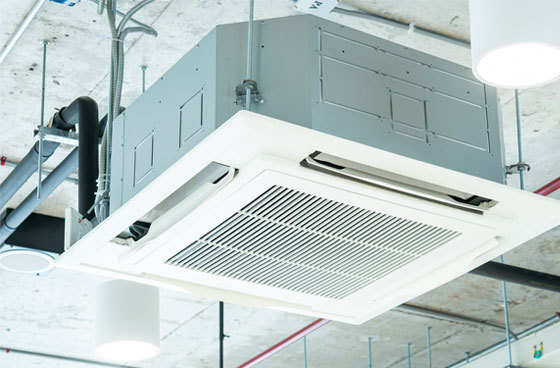
When homeowners begin comparing cooling options, three key questions usually arise:
Are window air conditioners cheaper to run than central air?
Are window air conditioners more efficient than central air?
Are window air conditioners cheaper than central air overall?
The answer is not a simple yes or no.. It depends on building size, insulation quality, usage patterns, climate zone, and system efficiency ratings.. For modern applications, a vrf air conditioning system offers excellent efficiency and zone control.
As an HVAC system specialist with over a decade of experience in residential and commercial climate control design, this guide provides a technically accurate, real-world comparison grounded in industry standards such as those developed by the ASHRAE (American Society of Heating, Refrigerating and Air-Conditioning Engineers).
This article will help you evaluate short-term costs, long-term operating expenses, energy efficiency metrics, comfort performance, and maintenance factors—so you can make a well-informed decision.
1. Understanding How Window and Central Air Systems Work
Before comparing cost and efficiency, it’s important to understand how each system operates.
Window Air Conditioners
A window air conditioner is a self-contained unit installed in a window or wall opening. It includes:
Compressor
Evaporator coil
Condenser coil
Expansion device
Integrated fan system
All components are housed in one compact cabinet. The system cools a single room by drawing in warm air, passing it across the evaporator coil, and exhausting heat outdoors.
Central Air Conditioning Systems
A central air system separates components into:
Outdoor condensing unit
Indoor evaporator coil (typically inside an air handler or furnace)
Ductwork distribution system
Thermostat controls
Air is cooled centrally and distributed through ducts to multiple rooms.
In larger commercial buildings—such as a multi-floor office complex—the system may incorporate variable refrigerant flow (VRF) technology for zoned control and improved energy performance.
2. Are Window Air Conditioners Cheaper Than Central Air? (Initial Investment)
Let’s start with upfront costs.
Window Units
Equipment cost: Typically lower
Installation: Minimal (DIY possible)
No ductwork required
For renters or small apartments, this can make window units financially accessible.
Central Air
Higher equipment cost
Professional installation required
Possible duct installation or modification
In single-family homes without existing ductwork, installation costs increase significantly.
Conclusion on initial price:
Yes, window air conditioners are generally cheaper than central air in terms of upfront installation cost.
However, initial price does not reflect lifetime operating cost.
3. Are Window Air Conditioners Cheaper to Run Than Central Air?
This question requires deeper analysis.
A. Energy Efficiency Ratings: SEER vs EER
Central air systems are rated using SEER (Seasonal Energy Efficiency Ratio).
Window units are commonly rated using EER (Energy Efficiency Ratio).
According to guidance from U.S. Department of Energy:
Higher SEER = better seasonal efficiency
Higher EER = better steady-state efficiency
Modern central systems often reach SEER ratings of 16–20+.
Window units may range from EER 9–12.
However, central systems cool entire homes, while window units cool individual rooms.
B. Usage Scenario Analysis
Scenario 1: Cooling One Room Only
If you live alone and only cool a bedroom at night, a window unit may consume less total energy than running a whole-house central system.
In this case, window units may indeed be cheaper to run.
Scenario 2: Cooling an Entire Home
If multiple window units are installed throughout a home, total energy consumption can exceed that of a properly sized central system.
In a 2,000 sq ft home I evaluated in a subtropical climate, five window units collectively consumed more peak energy than a high-efficiency central inverter system.
This demonstrates that operating cost depends heavily on scale and system design.
4. Are Window Air Conditioners More Efficient Than Central Air?
Efficiency must be evaluated from two perspectives:
1) Equipment Efficiency
Window units can be efficient for localized cooling.
2) System Efficiency
Central systems often outperform in whole-home scenarios due to:
Balanced airflow
Zoned control (in advanced systems)
Better humidity management
Variable-speed compressors
Humidity control is critical. According to Air-Conditioning, Heating, and Refrigeration Institute guidelines, improper humidity removal reduces comfort even if temperature appears correct.
Central systems typically manage latent heat (moisture removal) more effectively, improving comfort without overcooling.
So are window air conditioners more efficient than central air?
For single-room use: sometimes yes.
For whole-home climate control: generally no.
5. Long-Term Cost Comparison (10–15 Year Outlook)
Factor | Window Units | Central Air |
Equipment lifespan | 8–10 years | 12–20 years |
Maintenance cost | Low per unit | Moderate but centralized |
Energy efficiency over time | Declines faster | More stable with maintenance |
Property value impact | Minimal | Often increases resale value |
When factoring lifespan and resale value, central air may provide stronger long-term return on investment.
6. Comfort and Air Distribution
Window units:
Cool unevenly
Produce localized cold spots
Higher noise levels
Central air:
Uniform temperature distribution
Lower indoor noise
Better air filtration
In a large residential villa project we consulted on in Southeast Asia, switching from multiple window units to a centralized system reduced interior noise levels by approximately 30% while improving temperature consistency.
Comfort is not just about temperature—it includes airflow velocity, humidity control, and acoustic performance.
7. Maintenance and Reliability
Window Units
Filter cleaning required
Entire unit often replaced when compressor fails
Central Systems
Annual inspection recommended
Coil cleaning
Duct maintenance
Refrigerant charge verification
For example, proper duct maintenance—such as understanding how to clean central air conditioner ducts—directly impacts system efficiency and static pressure levels.
At TongXing, we design central HVAC systems with service accessibility in mind, ensuring components like coils and filters are positioned for practical maintenance. Our VRF and central systems are engineered for durability under continuous operation in commercial and residential environments.
If you are exploring high-efficiency centralized solutions, you can learn more here:
are window air conditioners better than central air
We focus on energy-optimized compressors, intelligent controls, and global technical support—serving both residential projects and large-scale commercial developments.
8. Climate Considerations
Climate zone strongly influences the answer to:
Are window air conditioners cheaper to run than central air?
Mild Climates
Window units can be cost-effective if cooling demand is limited.
Hot & Humid Climates
Central systems typically provide superior dehumidification and efficiency.
In regions with prolonged high humidity, central systems may reduce energy waste caused by short cycling common in oversized window units.
9. Environmental Impact
Central systems with higher SEER ratings:
Use less electricity per cooling output
Reduce carbon footprint over time
Window units, especially older models, may use outdated refrigerants or less efficient compressors.
Sustainable design increasingly favors inverter-driven centralized systems.
10. So, Which Is Better Financially?
Let’s summarize the three main search questions:
Are window air conditioners cheaper than central air?
Yes, upfront installation costs are generally lower.
Are window air conditioners cheaper to run than central air?
Sometimes—only when cooling small, limited spaces.
Are window air conditioners more efficient than central air?
Not typically for whole-home cooling. Central systems are often more efficient when properly sized and maintained.
There is no universal answer. The correct choice depends on:
Home size
Usage pattern
Climate zone
Long-term ownership plans
Energy rates
Final Recommendation
If you are cooling a studio apartment or temporary space, a window unit may be practical.
If you own a home, value comfort consistency, and plan to stay long term, a properly engineered central system often provides better overall performance and lifecycle value.
At TongXing, we help global clients evaluate real operating conditions before recommending solutions. Our engineering team provides:
Load calculation support
System sizing guidance
Energy-efficiency optimization
Custom commercial HVAC solutions
Choosing between window and central air is not just about price—it’s about total system performance over time.
Contact TongXing HVAC
Website: www.tongxinghvac.com
WhatsApp/Tel: +86 19903816965
Email: admin@tongxingac.com
